
International Cultural Studies
Die Veranstaltungen im Bereich der International Cultural Studies (ICS) ergänzen das Lehrangebot der Philosophischen Fakultät durch ihre internationale und interdisziplinäre Perspektive. In den angebotenen Lehrveranstaltungen lernen Teilnehmende Begriffe, Theorien, Frage- und Problemstellungen sowie Methoden der Kulturwissenschaft mit internationalem Schwerpunkt kennen. Dabei ermöglicht der Überblick über verschiedene Themengebiete wie Race, Class, Gender, Identität, Globalisierung, Ort und Raum, Populärkultur und Postkolonialismus den Teilnehmenden, strukturelle Zusammenhänge zu erkennen, einzuordnen und zu deuten sowie kulturwissenschaftliche Perspektiven auf aktuelle gesellschaftliche und kulturelle Debatten anzuwenden. Interaktive, projektbasierte sowie digitale und hybride Lehrformate fördern dabei die aktive Auseinandersetzung und den internationalen Austausch.
Aktuelle Projekte
IDV 401 International Cultural Studies
The lecture International Cultural Studies introduces students to basic select topics and concepts fundamental to the field of Cultural Studies by discussing texts and theories from international scholars. It provides an overview of key terms such as race, class, gender, and identity, among others, and seeks to enable students to understand and reflect upon these key terms and their underlying concepts within their historical, societal, and cultural context. To do so, it raises questions on how cultural texts and practices shape our understanding of society, politics, history and culture.
Lecturers: Dr. habil. Charlotte Lerg (charlotte.lerguni-mannheim.de), Dr. Ana-Sofia Uhl (icsuni-mannheim.de), University of Mannheim.
IDV 402 Intercultural Communication, Power & Inequality
Whether studying abroad, working in international teams, or navigating global debates, communication across cultural differences is part of everyday life. But such communication does not take place on neutral ground: It is shaped by power relations, social inequalities, and historical contexts. This seminar explores how intercultural communication works in practice and asks under which conditions it can be constructive, inclusive, and critical.
The course introduces key concepts of intercultural communication while moving beyond static notions of culture. It begins with a focus on identity and belonging, encouraging students to reflect on the cultural and social influences that shape their perspectives. Building on this, we examine communication in its various forms – verbal, nonverbal, and digital – and analyze how meaning is negotiated across differences.
A central focus of the seminar lies on the challenges of intercultural communication, including racism, stereotyping, xenophobia, othering, and bias. We further explore how contemporary phenomena such as globalization, social media, and algorithmic technologies influence intercultural encounters and reproduce or challenge existing power structures.
Throughout the semester, students are encouraged to connect theoretical concepts to real-world examples from media, politics, and their own experiences. In a collaborative group project, students will apply ethnographic and creative methods to explore intercultural encounters in everyday contexts and critically reflect on questions of identity, representation, and belonging.
Our diverse classroom offers a supportive space to practice intercultural communication firsthand. As this is a highly interactive seminar, active and regular participation is essential. Students are expected to contribute consistently to discussions, group work, and online activities; purely passive attendance is not sufficient for successful participation. English serves as the shared working language and is intended to facilitate inclusion. Throughout the semester, students will complete various assignments, prepare readings, and use short online quizzes on ILIAS to review and consolidate key concepts after each session.
Assessment consists of a portfolio (10–12 pages) for regular Mannheim students or, for incoming exchange students, an oral exam (15 minutes). Further details will be provided upon enrollment.
Lecturer: Dr. Ana-Sofia Uhl (icsuni-mannheim.de), University of Mannheim.
IDV 402 Food, Travel, and Cultural Encounters (online)
Food represents an ideal object of study for exploring encounters between people, products, and ideas, encounters shaped by ongoing forms of mobility that contribute to the complexity of contemporary social realities. Through an anthropological perspective, this course adopts food and mobility as key analytical lenses to examine how cultural diversity is experienced, represented, and negotiated in everyday life, with particular attention to the role of food in shaping moments of exchange, negotiation, memory, and cultural translation.
The course introduces students to key debates in cultural anthropology and mobility studies, with particular attention to the historical trajectories of human mobility and the intersections between tourism and migration in the contemporary world. Topics include food mobilities, the concept of foodscape, food tourism, exoticism, staged authenticity, and the role of the senses in shaping food-related experiences. These themes are discussed as culturally and politically situated processes rather than neutral or purely experiential phenomena. Alongside theoretical discussions, students engage with core methods of cultural anthropology such as participant observation, informal conversations, qualitative interviews, and field journaling. Through these methods, the course encourages critical reflection on how food-related mobilities and encounters are narrated, mediated, and communicated across different cultural contexts.
A distinctive feature of the course is its emphasis on experiential and reflexive learning. Students will experiment with the production of short ethnographic accounts based on personal and family food practices, encounters with producers and restaurateurs, travel experiences, or situations of temporary or permanent migration. These ethnographic restitutions may combine writing with visual and creative tools such as drawings, photography, or collage. Through the course, students will develop analytical and methodological skills useful for academic research in cultural studies, as well as for professional contexts such as intercultural mediation, cultural communication, publishing, and the creation of content related to food cultures. More broadly, the course aims to foster a critical rethinking of travel, food, and mobility as key dimensions through which differences, identities, and forms of social interaction are constructed, experienced, and transformed. Final examination: submission of a 10–15-page paper.
By the end of the course, students will be able to:
- develop a solid understanding of food mobilities and of the intersections between tourism and migration;
- critically engage with key concepts such as authenticity, exoticism, cultural representation, and the role of food in intercultural exchanges and mobility;
- apply anthropological perspectives and methods to the analysis of social and intercultural dynamics in international contexts;
- collect qualitative data through participant observation and oral interviews;
- keep a structured field journal and produce short ethnographic reports using written and visual formats (drawings, collages, photography).
Lecturer: Pietro Pagella (Pietro.Pagellauni-mannheim.de), University of Gastronomic Sciences, Pollenzo (Italy).
IDV 402 Food Across Cultures: Virtual Reflections on Culinary Identity & Global Perspectives (COIL University of Lisbon/
University of Mannheim) This COIL (Collaborative Online International Learning) seminar is held entirely online and virtually connects students from the University of Lisbon, Portugal, and the University of Mannheim, Germany, to examine food as a cultural, social, and political phenomenon. The seminar begins with an exploration of Portuguese and German food cultures, focusing on themes such as authenticity, memory, belonging, and transculturality, and situates personal food narratives within broader historical and global contexts. Working in international teams, students develop projects centred on their own food identities, linking these to issues of globalisation, power, and inequality. The course integrates concise lectures, guided discussions, Padlet-supported co-creation, reflective writing, and synchronous group work, culminating in joint final presentations.
Lecturers: Dr. Ana-Sofia Uhl (icsuni-mannheim.de) & Eva Breitbach (Virtualmobility.philuni-mannheim.de), University of Mannheim, Nuno Miguel Ribeira de Medeiros, University of Lisbon.
IDV 402 Criminality and Migration
On March 21, 2022, less than a month before the French presidential elections, far right candidate Eric Zemmour stated on national TV: “I want to stop illegal immigration and legal immigration. […] What I want is to send back all the people we no longer want; I want a ministry for re-migration and expulsion of foreigners we no longer want. I will reinstate the offense of illegal residence; I will expel offenders, criminals […].” And in October 2025, Friedrich Merz, the German chancellor and leader of the conservative CDU, said: “We have come a very long way on migration. Under this federal government, the numbers fell by 60 percent when comparing August 2024 with August 2025. But of course, we still have this problem visibly present in our cities. And that is why the Federal Minister of the Interior is now working to enable and carry out returns on a very large scale.”
Against the backdrop of rising nationalism, the growth of far-right movements across Europe, and increasing awareness of systemic inequalities, the rhetoric of political party leaders is becoming progressively more radical. From a historical point of view, these statements refer not only to institutions, such as citizenship, whose origins lie in the nineteenth century. They also contain important elements of nineteenth-century discourse on political participation. Inextricably linked to terms such as people, nation, and state, the ongoing debate on migration draws on many concepts with a profound and contradictory history. This course aims to identify these concepts and, by doing so, reconceptualize in a transnational perspective a moving subject of the present day.
The students are required to:
attend and actively participate in class;
give a short presentation (20 to 30 minutes, not more, not less) on one of the case studies;
- write an essay at the end of the semester on an admitted topic of their choosing or to pass an oral exam.
Lecturer: Lars Urbanski (lars.urbanskiuni-mannheim.de), University of Mannheim.
IDV 402 Making a Home? Migration and Diasporic Communities
The European debate on migration is becoming increasingly heated; new political measures give the impression that the continent is closing itself off—and Germany’s interior minister, too, is touting the drop in immigration figures as a success story. At the same time, conservative and far-right parties are increasingly invoking the concept of “home/homeland,” thereby suggesting that it is a space worth protecting. This seminar aims to open up and expand this discourse on “home/homeland” to include those groups against whom the term is being exploited: migrant communities. In particular, the concept of “diaspora” will be examined, as it is more closely linked to the notion of “homeland” than almost any other, by analyzing different global diaspora communities. The seminar will be held weekly in person, including one block session to present and discuss the case studies.
By the end of the semester, the students will be able to
- recognize, reflect, and contextualize the polyvalence of the term “home”
- critically discuss and evaluate key concepts such as “home”, “diaspora”, and “transnational community”
- use research concepts to analyze diasporic communities
- develop a hypothesis and build a scientific argument
Students are required to:
attend and actively participate in class
give a short presentation (15 min) on one of the case studies
write an essay at the end of the semester on an admitted topic of their choosing (10 – 15 pages, students University of Mannheim) or to pass an oral exam (15 min, incoming students)
Lecturer: Naomi Niemann (naomi.niemannuni-mannheim.de), University of Mannheim.
Vergangene Projekte
FSS 2026
IDV 402 Anthropology & Food for Travelers Pietro Pagella, University of Gastronomic Sciences, Pollenzo (Italy) IDV 402 Communication Across Cultures Dr. Ana-Sofia Uhl, University of Mannheim IDV 402 Decolonizing Film or: How to Challenge the Western Gaze Teresa Puchinger, University of Heidelberg IDV 402 Modern History of Ukraine: The Path of Eurointegration Dr. Ivan Balykin, University of Mannheim IDV 402 Re-Coding Power: Intersectional Perspectives on AI, Digital Violence, and Cultural Narratives Katharina Mosene, HIIG Berlin, HBI Hamburg, University of Mannheim IDV 402 Blended Intensive Program Mapping Taste: Food Across Cultures Eva Breitbach & Dr. Ana-Sofia Uhl, University of Mannheim HWS 2025/
26 IDV 401 International Cultural Studies Lecture Nico Stab, Dr. Ana-Sofia Uhl, Prof. Dr. Philipp Gassert, University of Mannheim IDV 402 Communication Across Cultures Dr. Ana-Sofia Uhl, University of Mannheim IDV 402 Developing a Global Mindset Dr. Agnes Bamford, NHH Bergen IDV 402 How to live on a damaged planet? Introduction to Environmental Humanities Katie Kung, Rachel Carson Center, LMU Munich IDV 402 Re-Coding Power: Intersectional Perspectives on AI, Digital Violence, and Cultural Narratives Katharina Mosene, HIIG Berlin, HBI Hamburg, University of Mannheim IDV 402 Sciencefluencing 101: Cultural Studies from Theory to Practice Nico Stab, University of Mannheim
Ansprechpartner
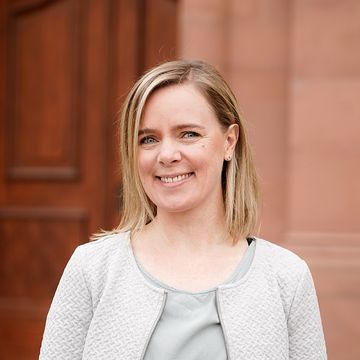
Dr. Ana-Sofia Uhl
Dekanat der Philosophischen Fakultät
Schloss – Raum EO 291
68161 Mannheim
Bitte schreiben Sie mir zur Terminvergabe eine E-Mail.